
Three nearby restaurants earn Michelin “Bib Gourmand” status

French tire manufacture and restaurant critic Michelin released its much-anticipated guide to Washington restaurants. No restaurants earned the top three-star rating, but three restaurants earned two stars, nine earned one star, and 19 restaurants, three of which are nearby, earned “Bib Gourmand” status for their “exceptional good food at moderate prices.”
LeDroit’s very own Royal (501 Florida Avenue NW) earned Bib Gourmand status. I frequently visit the royal for breakfast on weekends. Their coffee is decent and the breakfast pastries and arepas are great. A friend in West End routine visits for breakfast.
Red Hen (1822 First Street NW), just one block east of LeDroit Park, is another Bib Gourmand venue and is one of my favorite dinner spots. The menu is Italian and the pasta is deliciously fresh. Red Hen can get crowded, but you can often squeeze yourself around its peninsular bar, where you may eat dinner and drink.
If you’re looking for eclectic Chinese-French fusion, walk over to Kyirisan (1924 8th Street NW), one block west of LeDroit Park. The Tim Ma restaurant opened in March and the Post’s Tom Sietsema gave it a good review.
The nearest starred restaurants are the excellent Dabney (122 Blagden Alley NW) and Kinship (1015 7th Street NW), both near the Convention Center. Such proximity to highly rated restaurants would have been absolutely unthinkable when I moved to LeDroit Park in 2009. How times have changed.
Study finds LeDroit Park’s historic designation didn’t cause displacement
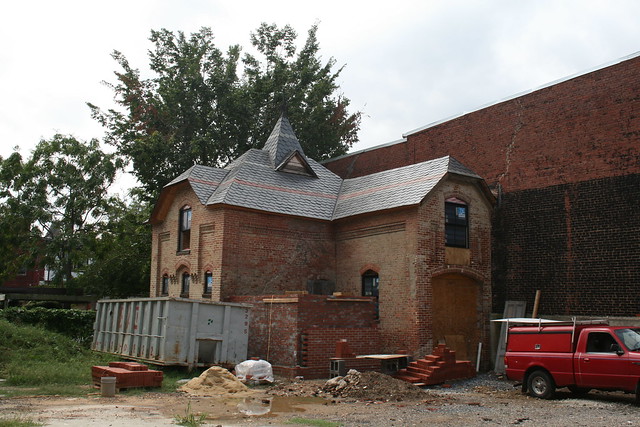
Does historic district designation lead to gentrification and displacement? Christine Rae Henry, a 19-year LeDroit Park resident, recently finished her dissertation on this topic and used LeDroit Park as her case study. She found the answer is no:
The broad findings show that displacement has been happening not just since the historic district designation in 1974, but actually began in the late 1960s when single-family homes that had been converted into multi-family units were beginning to be returned to single-family use (or mostly single family with a basement unit) a result of desegregation and population shift in the city as a whole.
The dissertation is also a wonderful study of LeDroit Park’s history.
HalfSmoke, LeDroit’s newest restaurant, opens on Florida Avenue

On Tuesday LeDroit Park’s newest restaurant, HalfSmoke opened at the corner of Florida and Georgia Avenues, having already received a good deal of press. HalfSmoke bills itself as a “fine casual” restaurant featuring half-smokes, which are smoked sausages made with beef and pork. HalfSmoke also serves a hybrid diner-carnival menu of milkshakes, funnel cakes, tater tots, and mac-n-cheese pops. And of course no restaurant would be viable outside of Utah without a bar.
The restaurant is the brainchild of Andre McCain, who comes to the business from investment banking in New York (now that’s a career move!). Mr. McCain has carefully curated the carnival-like experience not just with food, but also by stocking the restaurant with a free photo booth, board games, and televisions for watching sports. On my way out, I spied cornhole boards on the almost-finished patio on Florida Avenue.
You can celebrate the arrival of our newest restaurant by joining the LeDroit Park Civic Association for its monthly happy hour at HalfSmoke on Tuesday, October 11 from 6:30 to 8:30.
* * *
You may recall the building as the former home of Pharmacare, which shut down in 2013 when a Federal grand jury indicted its owner, Reddy Vijay Annappareddy, for Medicaid fraud. Although four of his employees pleaded guilty, last month a Federal judge in Maryland threw out the charges against Mr. Annappareddy.
Print out your own walking tour of LeDroit Park
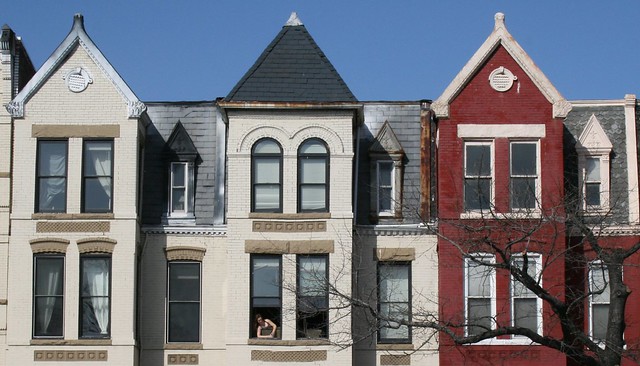
I have led historic walking tours of LeDroit Park for five years as part of the annual WalkingTown DC event. You can download the guide I wrote and related images and walk the tour yourself. The tour starts and ends at the arch at 6th and T Streets.
- Main guide text
- Images A-M, and S (print in black and white)
- Images N-R, and T (print in color)
The tour, when spoken to a crowd, takes about 90 minutes. If you read it silently, you can finish it faster.
If you want to learn about the architectural details of LeDroit Park, e.g. what makes a house Second Empire, check out the excellent LeDroit Park Conserved, a preservation book about LeDroit Park produced for the District government in the 1970s.
Two free history walking tours of LeDroit Park next month


Come on out for a free history walking tour of LeDroit Park next month. I conduct this tour annually as part of WalkingTown DC.
We will explore the unique architecture and the historical figures who transformed the neighborhood into the home of Washington’s black intelligentsia at the start of the 20th century. Neighborhood notables included Dr. Anna J. Cooper, Mayor Walter Washington, Sen. Edward Brooke, Rep. Oscar De Priest, Paul Laurence Dunbar, Mary Church Terrell, Duke Ellington, and Rev. Jesse Jackson. We will also admire the unique 19th-century houses and the 12 distinct architectural styles present in the neighborhood.
The tours will be on Sunday, September 18 at 2 pm and Sunday, September 25 at 2 pm. Meet me at the arch at 6th Street and Florida Avenue NW. The tours are free and open to the public.
Alternatively, for $15 you can attend Sarah Shoenfeld’s tour on September 11 to explore the history of housing segregation in LeDroit Park and Bloomingdale.
Did Hillary Clinton assassinate a Bloomingdale man? No, you idiot.
… Despite the ridiculousness of this claim, Julian Assange, the WikiLeaks founder self-exiled in the Ecuadorian Embassy in London, is actively fueling this conspiracy theory.
Some background: Seth Rich, a 27-year-old staffer for the DNC, was found murdered on a sidewalk at Flagler Place and W Street NW in Bloomingdale at 4:30 am on August 10. The police suspect his murder was a botched robbery in a neighborhood suffering a tripling of armed robberies this year.
When police found Mr. Rich, they found his watch, wallet, and credit cards on him. These facts have led conspiracy theorist away from the simplest explanation, a panicked robber, to a fantastical story of political revenge by Hillary Clinton on a DNC staffer who Mr. Assange strongly insinuates leaked tens of thousands of DNC emails.
This wild cloak-and-dagger theory has been thoroughly debunked, yet WikiLeaks is offering a $20,000 reward to catch the killer. While that may seem helpful, Mr. Assange is using one family’s tragedy to push some political agenda against Mrs. Clinton.
The Rich family and the police appealed to the public to come forward with information and the MPD is offering a $25,000 reward to informants. Mr. Assange’s publicity stunt distracts investigators from real leads.
Explore fair housing law in LeDroit and Bloomingdale next month
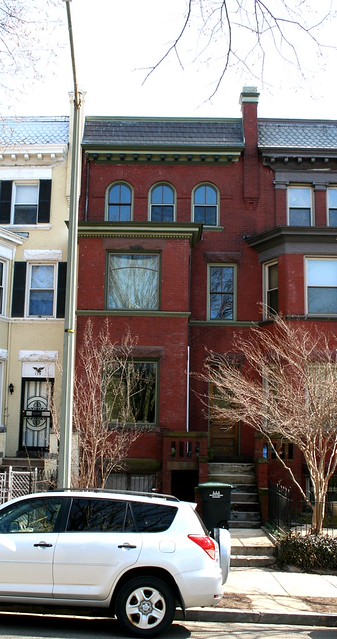 Did you know a house in Bloomingdale was the center of a landmark Supreme Court ruling on fair housing in 1948? Explore civil rights history in LeDroit Park and Bloomingdale on a walking tour next month. The tour, Mapping Segregation, will explore the history and eventual Supreme Court dismantling of de jure housing segregation.
Discover these topics on foot with historian Sarah Shoenfeld, who has extensively documented the history of racially restrictive covenants in DC.
Tour description:
In honor of the September 3 birthday of groundbreaking civil rights attorney Charles Hamilton Houston (1895-1950), historian Sarah Shoenfeld will lead a walking tour of DC’s adjacent LeDroit Park and Bloomingdale neighborhoods. Shoenfeld co-directs the online public history project Mapping Segregation in Washington DC, which shows how racially restrictive housing covenants kept much of Bloomingdale off-limits to African Americans until the 1940s. Houston, former Dean of Howard University’s law school and a NAACP attorney, waged numerous legal battles over housing in this neighborhood. One of them, Hurd v. Hodge, contributed to the Supreme Court’s landmark ruling that racial covenants were unenforceable. This tour will feature some of the houses and blocks subject to battles over covenants, and the shifting geographic lines that divided African Americans from whites in this area over the first half of the 20th century.
Tour details:
Sunday, September 11 at 10 am
Meet at the arch at 6th and T Streets NW
Price: $15 – buy tickets online from the Hill Center
Turn down that Prince music!

In 1998 LeDroit residents wrote an open letter to incoming Mayor Anthony Williams to complain about Prince and the House of Secrets (507 T Street).
Clean Up Street in LeDroit Park
We live amongst trash and filth in the 500 block of T Street NW, in the historic area of LeDroit Park. We are proud of our aged homes and the famous black Americans who lived in them. But when we turn the corner at Sixth and T streets, we are appalled at the piled garbage and trash. When we have special guests at our homes, we must hire a private company to remove the trash so that we will not be embarrassed. We also have a problem with the parties held in our neighborhood at an after-hours nightclub, the House of Secrets. It’s no secret that the last two times The Artist Formerly Known as Prince performed in the area, he had a party that went on from 1 a.m. until 5 a.m. on a Tuesday morning. The purple buses roared down our one-way street and unloaded noisy passengers. The limousines, cars and taxis pulled up, double parked and blocked our driveways. How is it that an after-hours establishment is allowed to exist in our neighborhood? We, law-abiding citizens, do not want this nightclub. We do not want to party. We want to sleep.
Lois Wiley and LilliAnn Williams, T Street NW
This letter appeared with other residents’ letters to Anthony Williams, who officially became mayor two days later. The House of Secrets has hosted parties for decades, but has been relatively quiet since 2013, when two people were stabbed outside the house during a party.
The Alcoholic Beverage Control Board investigated the incident to decide whether it should decline future temporary liquor license requests for the house. Although nightclubs and bars are not permitted in that location by zoning, the city does issue occasional temporary event licenses, usually for one specific day. Both the LeDroit Park Civic Association and ANC1B submitted letters protesting future licenses.
Washington Post profiles LeDroit Park
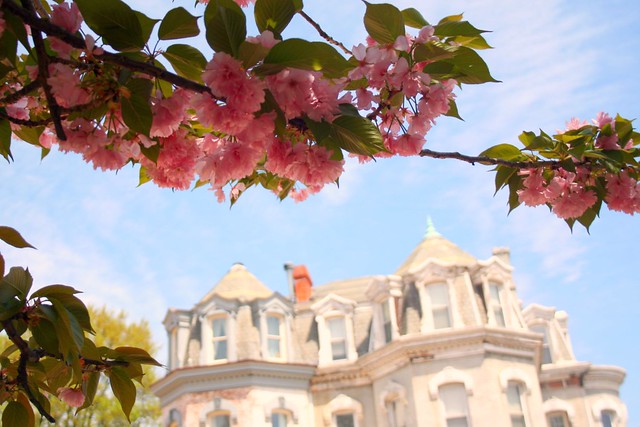
The Washington Post published a profile of our neighborhood in the real estate section. Here’s the lede:
It’s one of Washington’s most distinctive neighborhoods. Dotted with quirky freestanding homes in a variety of styles, originally designed as a gated suburb and later the place to be for the District’s African American intelligentsia, LeDroit Park has always been unusual.
Read the full story in the Post.
JBG will extend W Street as a woonerf

JBG revealed more plans for the residential development it plans to build at 945 Florida Avenue NW. This is the site abutting the 965 Florida Avenue, which is slated for a Whole Foods. 945 is slated to be a multifamily building, which is not surprising, but the developer has opted to extend W Street one block from its current terminus at Florida Avenue NW to Ninth Street NW.
The W Street extension has been a long-standing goal of neighborhood planning efforts as there are currently few east-west connections between that section of Florida Avenue and Georgia Avenue. Smaller street grids make walking easier as there are fewer “superblocks” to walk around.
The new one-block extension will be privately built, owned, and maintained. It will be constructed as a woonerf, a street where automobile and pedestrian traffic share the same space. The best example of a woonerf in the area is Cady’s Alley in Georgetown.
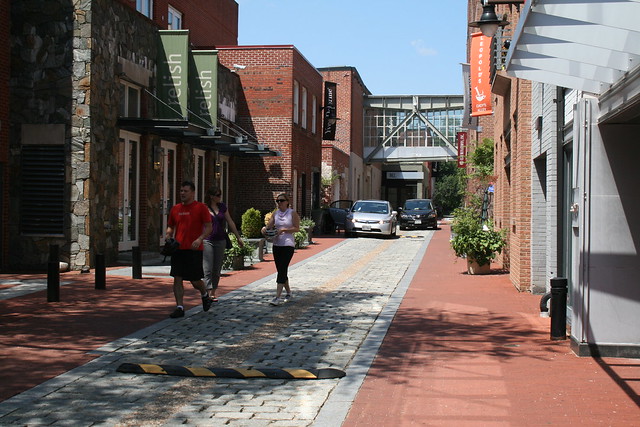
The developer is building the project matter-of-right.







Recent Comments