
Three nearby restaurants earn Michelin “Bib Gourmand” status

French tire manufacture and restaurant critic Michelin released its much-anticipated guide to Washington restaurants. No restaurants earned the top three-star rating, but three restaurants earned two stars, nine earned one star, and 19 restaurants, three of which are nearby, earned “Bib Gourmand” status for their “exceptional good food at moderate prices.”
LeDroit’s very own Royal (501 Florida Avenue NW) earned Bib Gourmand status. I frequently visit the royal for breakfast on weekends. Their coffee is decent and the breakfast pastries and arepas are great. A friend in West End routine visits for breakfast.
Red Hen (1822 First Street NW), just one block east of LeDroit Park, is another Bib Gourmand venue and is one of my favorite dinner spots. The menu is Italian and the pasta is deliciously fresh. Red Hen can get crowded, but you can often squeeze yourself around its peninsular bar, where you may eat dinner and drink.
If you’re looking for eclectic Chinese-French fusion, walk over to Kyirisan (1924 8th Street NW), one block west of LeDroit Park. The Tim Ma restaurant opened in March and the Post’s Tom Sietsema gave it a good review.
The nearest starred restaurants are the excellent Dabney (122 Blagden Alley NW) and Kinship (1015 7th Street NW), both near the Convention Center. Such proximity to highly rated restaurants would have been absolutely unthinkable when I moved to LeDroit Park in 2009. How times have changed.
HalfSmoke, LeDroit’s newest restaurant, opens on Florida Avenue

On Tuesday LeDroit Park’s newest restaurant, HalfSmoke opened at the corner of Florida and Georgia Avenues, having already received a good deal of press. HalfSmoke bills itself as a “fine casual” restaurant featuring half-smokes, which are smoked sausages made with beef and pork. HalfSmoke also serves a hybrid diner-carnival menu of milkshakes, funnel cakes, tater tots, and mac-n-cheese pops. And of course no restaurant would be viable outside of Utah without a bar.
The restaurant is the brainchild of Andre McCain, who comes to the business from investment banking in New York (now that’s a career move!). Mr. McCain has carefully curated the carnival-like experience not just with food, but also by stocking the restaurant with a free photo booth, board games, and televisions for watching sports. On my way out, I spied cornhole boards on the almost-finished patio on Florida Avenue.
You can celebrate the arrival of our newest restaurant by joining the LeDroit Park Civic Association for its monthly happy hour at HalfSmoke on Tuesday, October 11 from 6:30 to 8:30.
* * *
You may recall the building as the former home of Pharmacare, which shut down in 2013 when a Federal grand jury indicted its owner, Reddy Vijay Annappareddy, for Medicaid fraud. Although four of his employees pleaded guilty, last month a Federal judge in Maryland threw out the charges against Mr. Annappareddy.
JBG will extend W Street as a woonerf

JBG revealed more plans for the residential development it plans to build at 945 Florida Avenue NW. This is the site abutting the 965 Florida Avenue, which is slated for a Whole Foods. 945 is slated to be a multifamily building, which is not surprising, but the developer has opted to extend W Street one block from its current terminus at Florida Avenue NW to Ninth Street NW.
The W Street extension has been a long-standing goal of neighborhood planning efforts as there are currently few east-west connections between that section of Florida Avenue and Georgia Avenue. Smaller street grids make walking easier as there are fewer “superblocks” to walk around.
The new one-block extension will be privately built, owned, and maintained. It will be constructed as a woonerf, a street where automobile and pedestrian traffic share the same space. The best example of a woonerf in the area is Cady’s Alley in Georgetown.
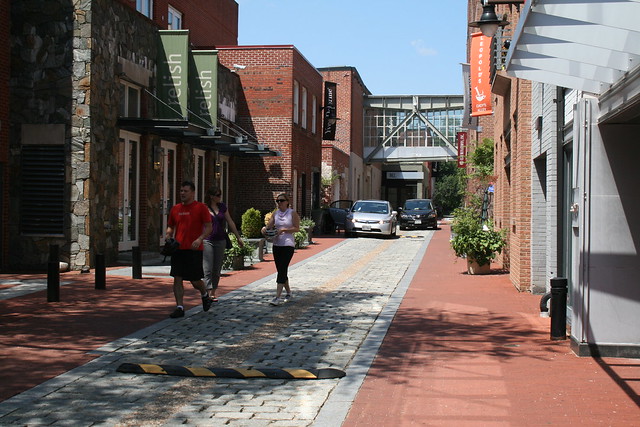
The developer is building the project matter-of-right.
JBG reveals the locations of the new retailers opening this fall
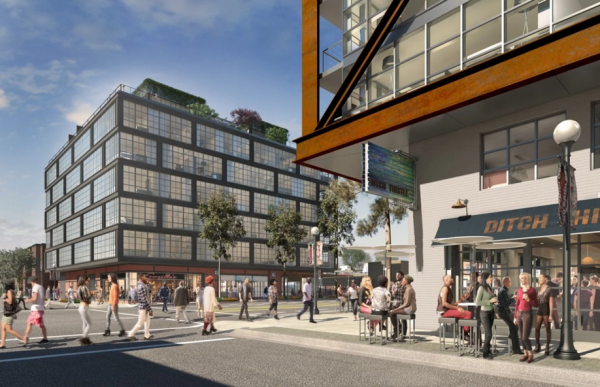
The four mixed-use buildings on Eighth Street near the 9:30 Club are about to open. The quartet is the product of prolific Washington area developer JBG, which recently released the layout of the ground-floor retail tenants. The retail spaces include small retail shops, a few restaurants, a small movie theater, and art galleries.
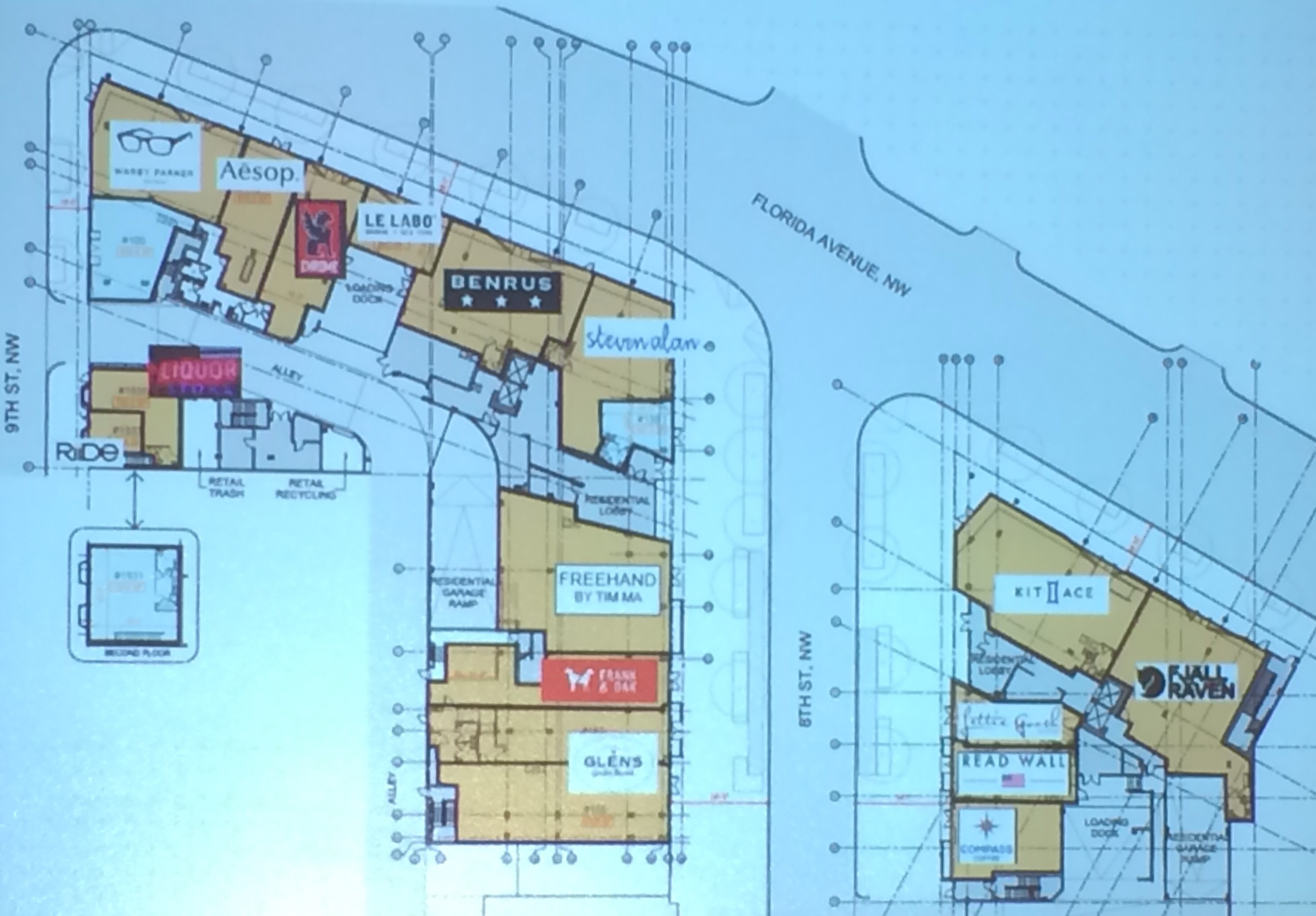
The Shay is a duo of apartments on the 700 and 800 blocks of Florida Avenue NW. Retailers include
- Riide – A DC-based electric bike company (9th Street)
- Serv U Liquors – A liquor store that previous stood on the development site (9th Street)
- Warby Parker – Purveyor of hip spectacles (9th Street & Florida Avenue)
- Aesop – An Australian retailer of sustainable skincare, haircare and other personal care products (800 b/o Florida Avenue)
- Chrome – A San Francisco-based bike bag purveyor (800 b/o Florida Avenue)
- Le Labo – A French perfumery (800 b/o Florida Avenue)
- Benrus – A Rhode Island-based clothing retailer (800 b/o Florida Avenue)
- Steven Alan – Casual clothing for men and women (8th Street & Florida Avenue)
- An unnamed restaurant from Tim Ma, owner of Water & Wall in Arlington and Maple Ave. in Vienna (8th Street)
- Frank & Oak – A hip, Montréal-based men’s clothing retailer (8th Street)
- Glen’s Garden Market – The second location of this DC-based grocer will also serve beer. (8th Street)
- Compass Coffee – The second location for the coffee shop that currently operates on 7th Street in Shaw (8th Street)
- Read Wall – DC-based menswear retailer selling knits, outerwear, custom suits, and neckware (8th Street)
- Lettie Gooch – A clothing boutique moving from U Street (8th Street)
- Kit and Ace – A retailer selling clothes made of a sturdier cashmere (8th Street & Florida Avenue)
JBG is still actively leasing three retail bays. The Shay’s grand opening is today from 6 pm to 9 pm.
Just north on Eighth Street at V Street, JBG has sold numerous condos at 2030 8th Street and has nearly completed the larger Atlantic Plumbing apartments on the north side of V Street. The company has released the retail layout of both buildings.
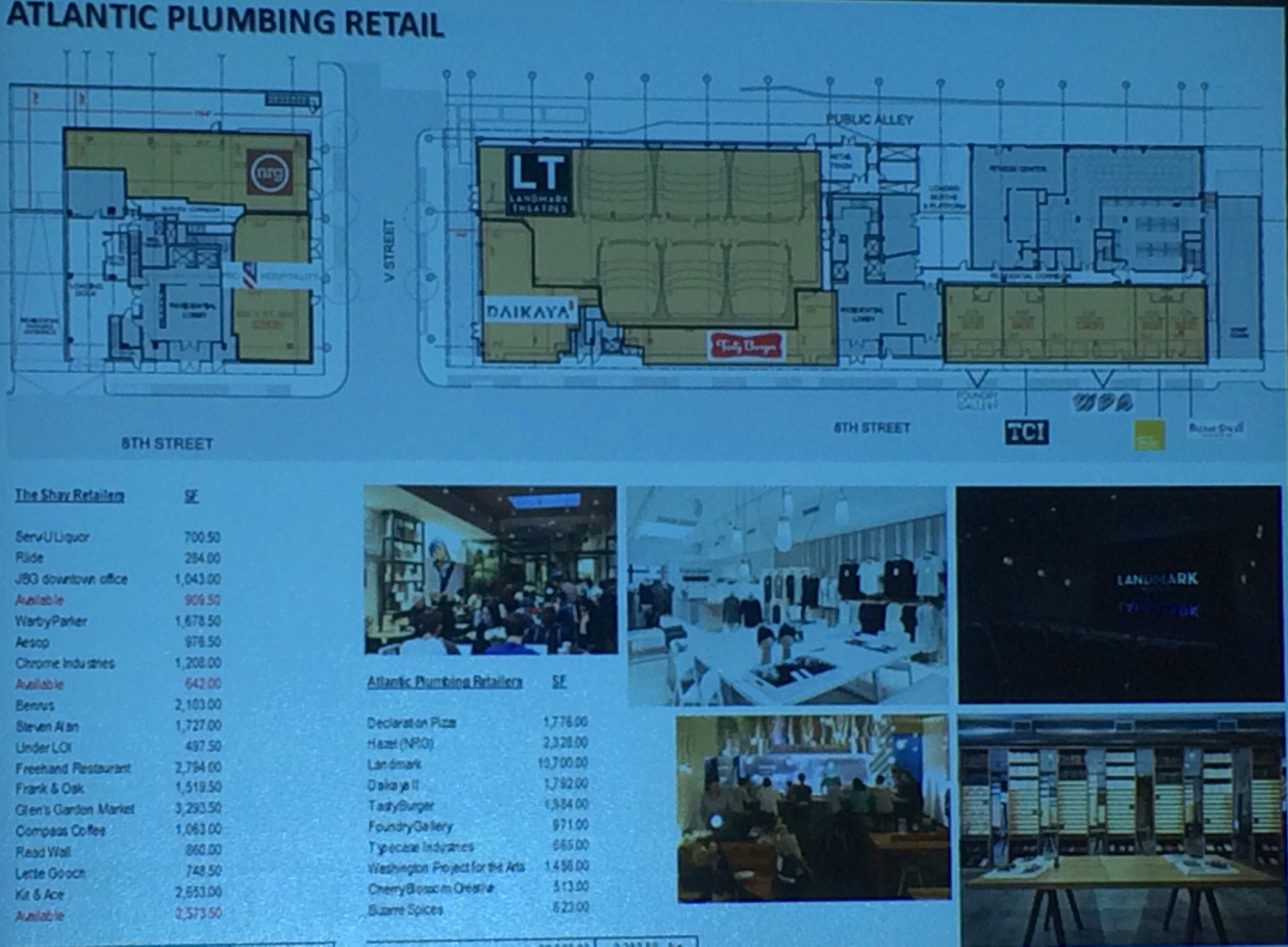
The retailers include
- Hazel (probably) – A new restaurant from Neighborhood Restaurant Group, which currently owns Birch & Barley and Bluejacket (V Street)
- Declaration Pizza – A new pizza shop from the owners of Lincoln and Teddy & the Bully Bar (8th & V Streets)
- Landmark Theatre – A theater featuring independent films in six small-screen mini-theaters (V Street)
- An unnamed ramen restaurant from the people behind Daikaya in Chinatown (8th & V Streets)
- Tasty Burger – The first DC-area location of this Boston-based burger chain (8th Street)
- Bazaar Spices – The second location for this independently owned herbs and spice shop, which also sells at Union Market (8th Street)
- Cherry Blossom Creative – A graphic-design studio that will also offer original works for retail purchase (8th Street)
- Foundry Gallery – An artist-run gallery that will move from Dupont Circle (8th Street)
- Typecase Industries – A locally-based letterpress and design studio (8th Street)
- Washington Project for the Arts – The headquarters for a non-profit arts support organization (8th Street)
All shops will be open by the end of the year.
The Royal offers new happy hour specials
The Royal, the new restaurant at Fifth Street and Florida Avenue, is offering two new happy hours. I typically get breakfast at the Royal on weekends since they serve hot breakfast items and an array of coffee drinks. I’m always surprised how many strollers I see in that place; the Royal’s breakfast is popular with the sippy cup set.
For adults the Royal is offering a new happy hour from 3 pm to 6 pm daily and 10 pm to 1 am Sundays through Thursdays:
- $5 house vermouth (the vermouth in the vintage copper fire extinguisher)
- $5 Narragansett tallboys
- $7 classic cocktails
- Daiquiris
- Palomas
- Caipirinhas
- Old Fashioneds
- others
- $7 wine by the glass: one red, one white (daily rotating selection)
The Royal receives plenty of good press
The Royal, the new cafe/bar that opened at Fifth Street and Florida Avenue last month is receiving a lot of positive press coverage.
- “Colombian-ish Restaurant The Royal Now Open in LeDroit Park.” Washington City Paper.
- “The Royal brings South American flavors and homemade vermouth to LeDroit Park.” Washington Post.
- “Take a Look Inside Ledroit Park’s Exciting New Restaurant: The Royal.” Washingtonian.
- “First Look: The Royal Opens in LeDroit Park.” Zagat.
- “Another Peek Inside The Royal now Open in LeDroit Park.” PoPville.
Two businesses open this week
Two restaurants open this week on Florida Avenue, continuing the transformation of intermittently vacant properties into food establishments.
The first is the LeDroit Royal (501 Florida Ave NW), which opens today (Thursday) at 7 am. The Royal has been under construction for months and I was able to attend its soft opening on Tuesday night. The interior renovations are remarkable and the menu provides a wide array of cocktails, on-tap vermouth, and Colombian and Guatemalan food. Like Bistro Bohem, the Royal opens as a coffee shop during the day and transforms into a bar at night.
Read the Post’s review for more details.

Just up the street, Rito Loco (606 Florida Ave NW) opens on Friday at 11 am. Like the Royal, Rito Loco has been under construction for several months. Rito Loco is the brick-and-mortar incarnation of the popular burrito food truck.
The shop is more of a fast-food operation with limited seating, but it may expand. I talked with the owner two weeks ago and he said he would eventually like to add a roof deck once he gets financing for it.
Glen’s Garden Market coming to 8th & Florida
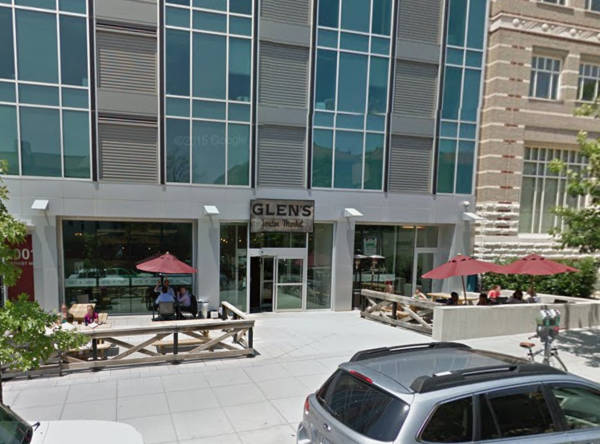
Local grocer Glen’s Garden Market will open a second location on Florida Avenue just west of LeDroit Park. Glen’s first store, which replaced the “Secret” Safeway on 20th Street in Dupont several years ago, is a small market specializing in locally grown food.
The new location in the new Shay apartment building at 8th Street and Florida Avenue will only cover 2,100 square feet. Unlike the Dupont location, the new space will forgo the pizza oven and smoker, but will cordon off an area for a beer garden, presumably on the spacious 8th Street front.
Read the City Paper story for the full details.
Whole Foods is coming!
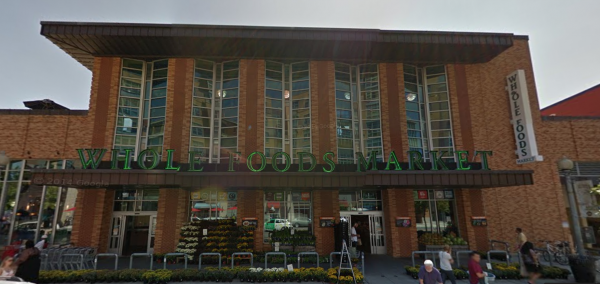
The Washington Business Journal reports that Whole Foods is slated for a new development on the parking lot at Florida and Sherman Avenues. The retailer’s arrival is typically a harbinger of soaring real estate values for surrounding neighborhoods. Whole Food is the latest iteration of potential tenants, which had before included Harris Teeter.
The Whole Foods is part of a proposed mixed-use development by developers MRP and JBG, the latter of which is finishing several development projects just a few blocks away.
The development proposal is far from final. Since the development involves the disposition of District-owned land, the DC Council will have to approve the deal.
Area residents have enjoyed a grocery renaissance over the past two years. A new Giant, the largest grocery store in DC, opened at 7th and P Streets in November 2013. A new Trader Joe’s opened at 14th and U Streets in March 2014.
Here’s an updated list of of LeDroit Park’s nearest grocery stores, as measured from Anna Cooper Circle.
| Store | Location | Distance (mi) |
|---|---|---|
| Giant | 7th & P Streets NW | 0.6 |
| Whole Foods (proposed) | Florida & Sherman Avenues NW | 0.7 |
| Trader Joe’s | 14th & U Streets NW | 0.9 |
| Safeway | 5th & L Streets NW | 0.9 |
| Harris Teeter | 1st & M Streets NE | 1.0 |
| Whole Foods | 1400 blk. P Street NW | 1.1 |
A slew of hip retailers are opening near LeDroit Park
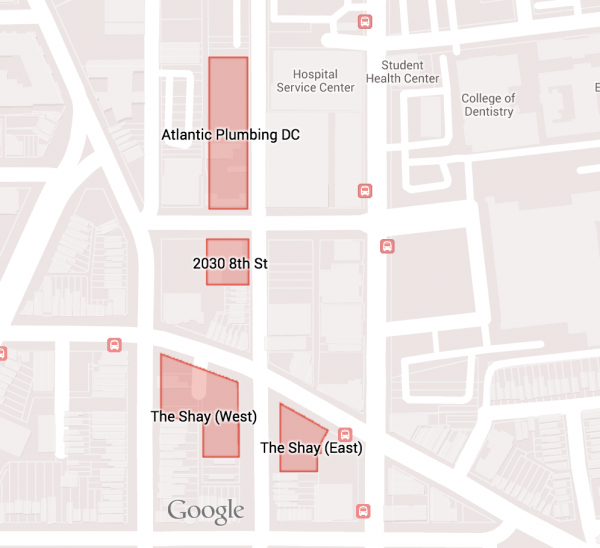
New shops are opening just west of LeDroit Park. Prolific Washington area developer JBG is nearing completion of the four buildings it is constructing just west of Georgia Avenue. Warby Parker, Compass Coffee, and restaurants from the people behind Birch & Barley and Daikaya will open soon.
The buildings, you may recall, have been in progress for several years. The northern two buildings, Atlantic Plumbing and 2030 8th Street sit on 8th Street on either side of V Street NW. The northern building, Atlantic Plumbing, is a 375-unit apartment building with ground-floor retail and a six-screen movie theater. The smaller southern building, 2030 8th Street is a 62-unit condo building.
The WBJ summed up the retail summed up the retailers coming to Atlantic Plumbing:
- Landmark Theatre – Six-screen theater featuring independent films.
- Hazel (probably) – A new restaurant from Neighborhood Restaurant Group, which currently owns Birch & Barley and Bluejacket.
- An unnamed ramen restaurant from the people behind Daikaya in Chinatown.
- Bazaar Spices – The second location for this independently owned herbs and spice shop, which also sells at Union Market.
- Cherry Blossom Creative – A graphic-design studio that will also offer original works for retail purchase.
- Foundry Gallery – An artist-run gallery that will move from Dupont Circle.
- Declaration Pizza – A new pizza shop from the owners of Lincoln and Teddy & the Bully Bar.
- Tasty Burger – The first DC-area location of this Boston-based burger chain.
- Typecase Industries – A locally-based letterpress and design studio.
- Washington Project for the Arts – The headquarters for a non-profit arts support organization.
On the 700 and 800 blocks of Florida Avenue, JBG is nearing completion of the two buildings, called the Shay, it has constructed above the Metro tunnel. Back in 2011, I documented the protracted saga to redevelop these two parcels. Though JBG had considered offering one of the buildings as condos, it has since chosen to keep both buildings as rentals, delivering a total of 336 apartments.
The WBJ reports the following retailers for the Shay:
- Warby Parker – Purveyor of hip spectacles.
- Freehand – A restaurant from Tim Ma, owner of Water & Wall in Arlington and Maple Ave. in Vienna.
- Compass Coffee – The second location for the coffee shop that currently operates on 7th Street in Shaw.
- Aesop – An Austrialian retailer of sustainable skincare, haircare and other personal care products.
- Benrus – The second U.S. locaiton of this watchmaker.
- Kit and Ace – Luxury clothing retailer.
- Read Wall – D.C.-based menswear retailer selling knits, outerwear, custom suits, and neckware.
- Steven Alan – Casual clothing for men and women.







Recent Comments