
Learn about street improvements; run for the civic association board
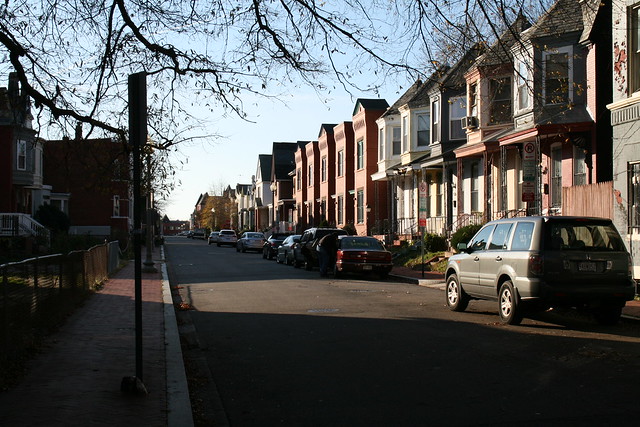
Learn about DDOT street improvements, review a neighbor’s request for a variance, and vote for civic association officers at the next week’s civic association meeting. The next meeting is Tuesday, May 26 at 7 pm in the basement of the Florida Avenue Baptist Church (623 Florida Ave – enter at the rear).
DDOT will present its plan for installing green infrastructure to reduce stormwater flow into the sewers during storm events. Such infrastructure can include rain gardens and pervious alleys that absorb water.
A neighbor at 2118 2nd St NW will present her plan to add a 90-square-foot addition to her house. She will request support for a zoning variance to build her addition.
The association will also hold annual elections for officers. The positions are President, Vice President, Secretary, and Treasurer. All association members are eligible to run and vote.
President Golda Philip and Secretary Brian Footer, who is also our ANC Commissioner, have chosen not to run again. At least one person has agreed to run for each position, but we will open the floor to additional nominations (you may nominate yourself).
(Disclosure: I am now the Vice President and will run for President.)
Street sweeping resumes Monday

The Department of Public Works, which collects trash, plows snow, and issues parking tickets, will resume street sweeping on Monday, March 16. If you park on the street, be sure to move your car according to the street sweeping signs posted on each street.
Street sweeping ended in October and several of our streets desperately need cleaning.
LeDroit Park’s water doesn’t come from McMillan
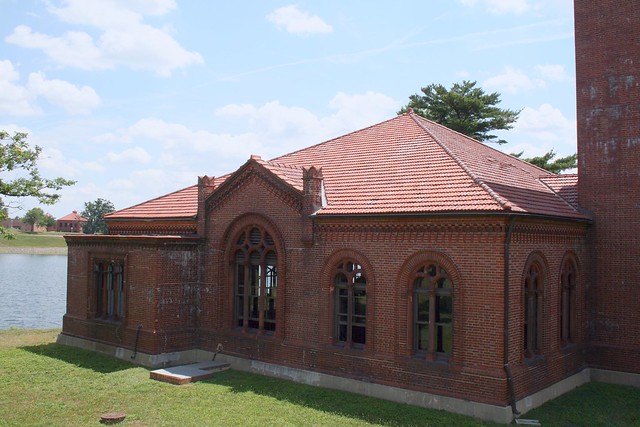
The McMillan Reservoir lies just north of LeDroit Park and just east of Howard University. Don’t let this large and visible piece of water infrastructure fool you. The reservoir supplies water not to LeDroit Park, but to much of downtown, Capitol Hill, Southwest, the Navy Yard, and Historic Anacostia (see blue pipes below).
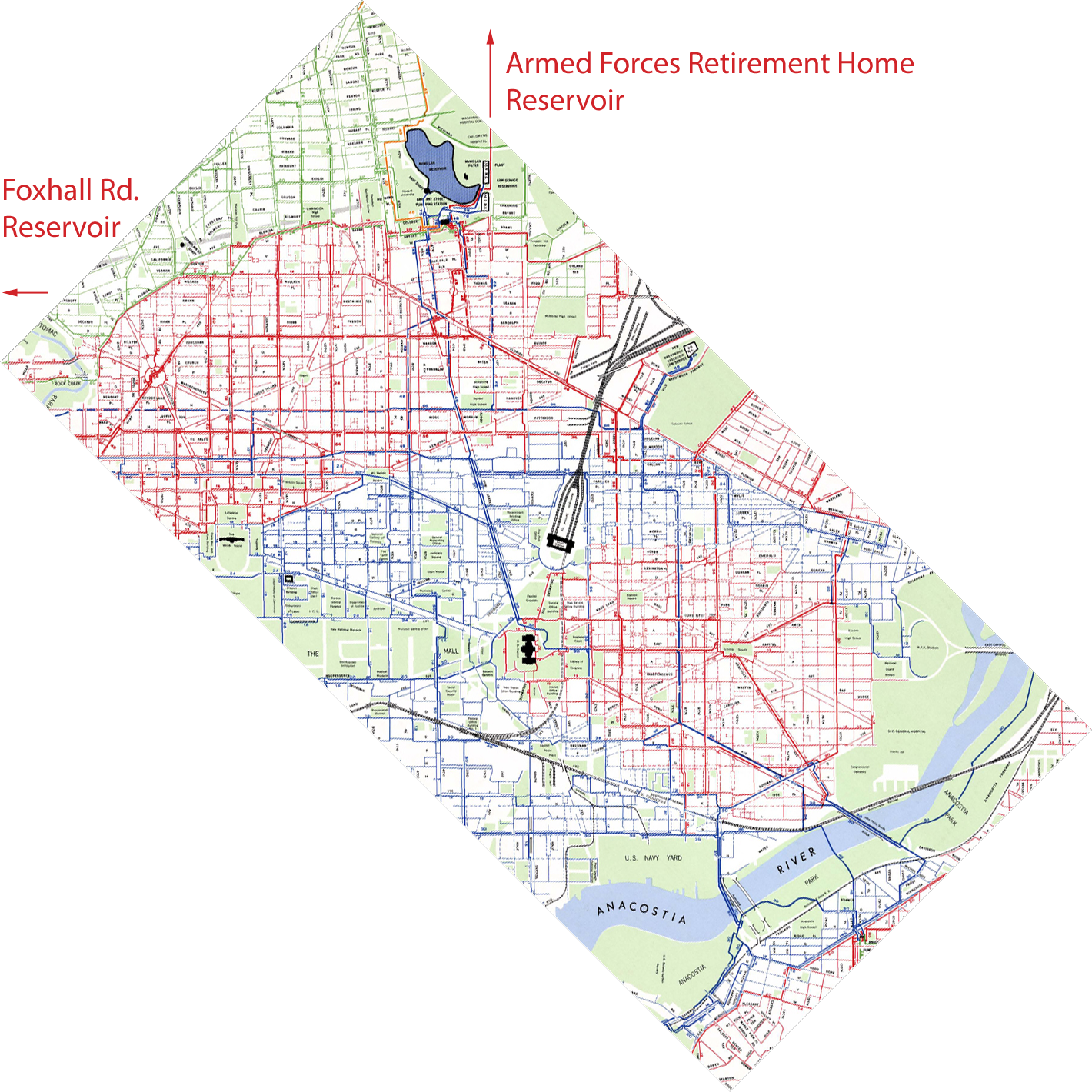
According to a 1985 DC water distribution map, LeDroit Park’s water comes from a reservoir on Foxhall Road and a reservoir on the grounds of the Armed Forces Retirement Home (see the red pipe network). These reservoirs, like all other reservoirs in the city, receive their water from the Dalecarlia Reservoir, which is run by the U.S. Army Corps of Engineers. The USACE pipes water to Dalecarlia from intake points at Little Falls and Great Falls on the Potomac.
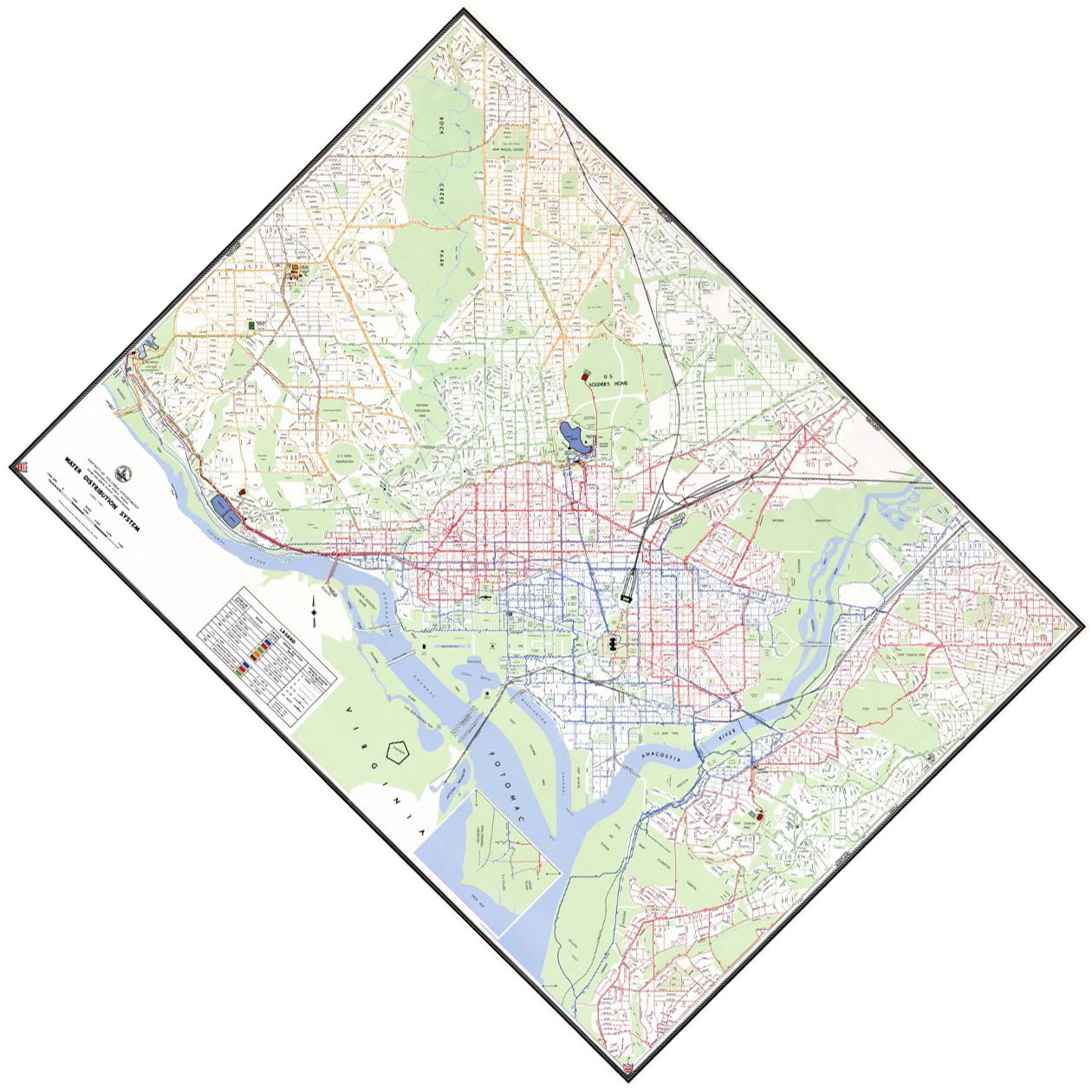
From Dalecarlia, water is piped to all of the secondary reservoirs, which typically sit atop highpoints in the city. (In a previous post we covered the century-old, straight-line tunnel that delivers water to McMillan.) Gravity pulls the water down from each reservoir to neighborhoods at lower elevations. Each neighborhood must be sufficiently lower than its supplying reservoir to receive enough water pressure at the faucet.
(I had difficulty finding these government maps, but found them at City Block.)
DDOT to plant 16 trees in LeDroit Park this fall
Fall is a good time to plant trees. DDOT has released its tree-planing map and LeDroit Park is slated to receive 16 trees. The agency only plants trees in public space, meaning the trees will be planted in the tree boxes or planting strips between the sidewalks and the curbs.
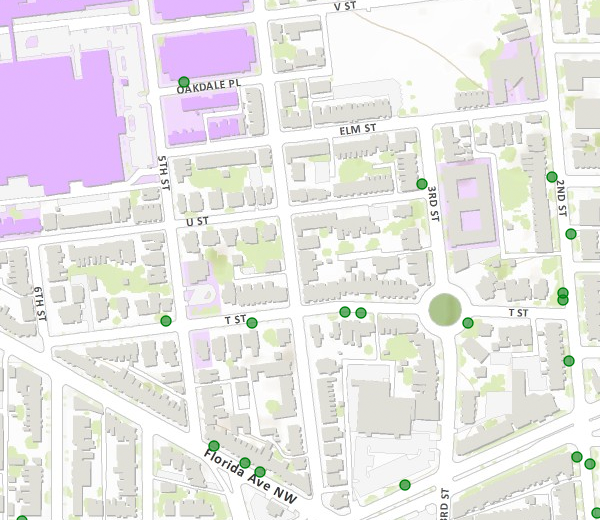
- 501 T Street
- 406 T Street
- 324 T Street
- 318 T Street
- 471 Florida Avenue
- 1934 3rd Street
- 1842 2nd Street
- Opposite 1915 2nd Street
- Opposite 1919 2nd Street
- 1948 2nd Street
- 1929 2nd Street
- 329 Rhode Island Avenue
- 455 Florida Avenue
Sweetgum (Slender Silhouette cultivar)
- 453 Florida Avenue
- Opposite 432 Oakdale Place
Cherry tree (Snow Goose cultivar)
- Southwest circumference of Anna Cooper Circle
Mayor Gray announces a task force to address area flooding
Later this morning, Mayor Vincent Gray, Councilmember Kenyan McDuffie (D – Ward 5), and representatives from DC Water and District agencies, will announce the creation of a task force to address the flooding that has occurred in numerous basements in LeDroit Park and Bloomingdale since July.
The mayor and councilmember will hold the press conference today at 11:30 am at the park at triangle park at First Street and Florida Avenue NW.
During several downpours in July, the overtaxed sewers below Florida Avenue in LeDroit Park and below several streets in Bloomingdale backed up into residents’ basements.
DC Water, the semi-independent agency that manages the drinking water and sewer infrastructure, says the completion of new diversion sewer tunnels in 2025 will solve the problem for good. Waiting 13 years is little consolation for residents whose basements have flooded with diluted sewage.
Video: Bloomingdalers upset about recurring flooding
Channel 4 has a short segment on Tuesday night’s flooding in Bloomingdale and LeDroit Park. The Post also has a story describing the sewage-drenched nightmare that struck many residents’ basements.
DC Water, which is responsible for the water pipes and sewers, left the following note in the comments section of yesterday’s post on the flooding:
Neighbors,
We’ve received a number of phone calls, tweets and email inquiries from Bloomingdale, LeDroit and Eckington customers who faced flooding last night. We’re so sorry to hear this has happened, and want to provide some background information as well as next steps.
The sewer system under this part of the District was installed generations ago by the federal government. At the time, populations were smaller, rains were likely lighter, and people weren’t commonly living in basements. The system was not designed to handle the volume it handles today. We inherited this system and are working to upgrade it, but this is not a fast, simple or inexpensive process.
We do clean every catch basin in the District once a year, and we come through flood-prone areas to do more cleaning every time a big storm is predicted. This one was not part of any weather forecast. The volume of rain in such a short period would overwhelm many catch basins as well.
The best short-term solution is a backflow preventer, which a licensed plumber can install. The long-term solution is enlarging the capacity of the sewer system, which will come as part of our Clean Rivers Project. It is a 20-year, $2.6 billion effort to build 13 miles of tunnels, which will capture stormwater and sewage and send them to our Blue Plains Advanced Wastewater Treatment Plant. The tunnel will start at Blue Plains and is under construction now. The last segment will make its way from RFK Stadium to Gallaudet University and will relieve the historic flooding problems in Bloomingdale, Eckington and Edgewood.
More details are here: http://www.dcwater.com/workzones/projects/anacostia_river_information_sheet.cfm. Customers with questions can feel free to email us at twitter@dcwater.com or call (202) 612-3400 anytime.
DC Water
Office of External Affairs
There are two things to glean from the comments section in yesterday’s post. One is that a number of Bloomingdale residents have said that flooding occurs in their basements more than once a year. Another is that DC Water’s solution, which includes the construction of an interceptor sewer tunnel, is years away.
DC Water will address residents on Monday, July 16 at 7 pm at St. George’s Episcopal Church at 2nd and U Streets NW.
Storm floods streets and basements of Bloomingdale
During torrential downpours the Bloomingdale neighborhood experiences flooding. Yesterday evening’s storm flooded numerous Bloomindale basements and the intersection of Rhode Island Avenue, T Street, and First Street NW.
The Boundary Stone restaurant (116 Rhode Island Avenue NW) posted a photo of a flooded Rhode Island Avenue NW.
Why did this section of the street flood? DC Water, which runs the water pipes, sewers, and storm drains, blames the lack of pipe capacity in Bloomingdale.
A closer look at the 1861 Boschke map of the District of Columbia reveals that the northern reaches of Tiber Creek flowed right through Bloomingdale. In fact the creek flowed right where Rhode Island Avenue flooded at T Street NW.
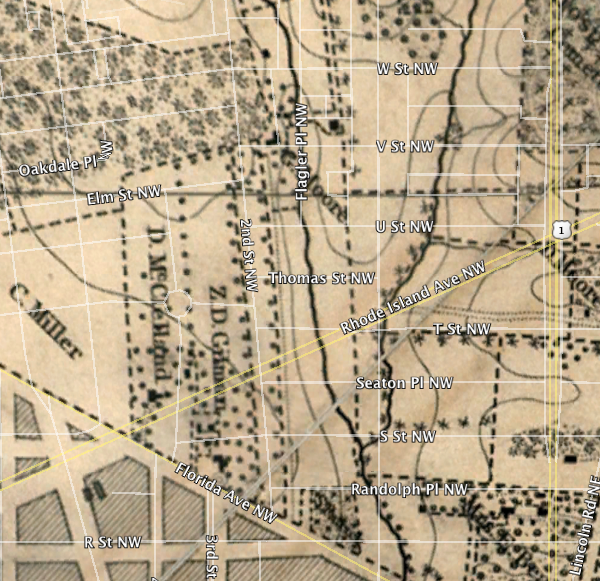
Boschke map with modern streets superimposed
Whether the creek still flows underground in this location is something I will leave to experts. However, creeks, like all water, flow to the lowest point on the land. The creek’s former presence at this location suggests that the terrain slopes downward on all sides, directing rainwater to this critical flood point.
Ward 5 Councilmember Kenyan McDuffie (D) was on the scene and DC Water has promised to brief him soon on their Bloomingdale flood solution, which they say is on the way. Though this degree of flooding is rare, Bloomingdale residents will surely welcome and demand a permanent fix.
Our park’s rain garden helps to save the river
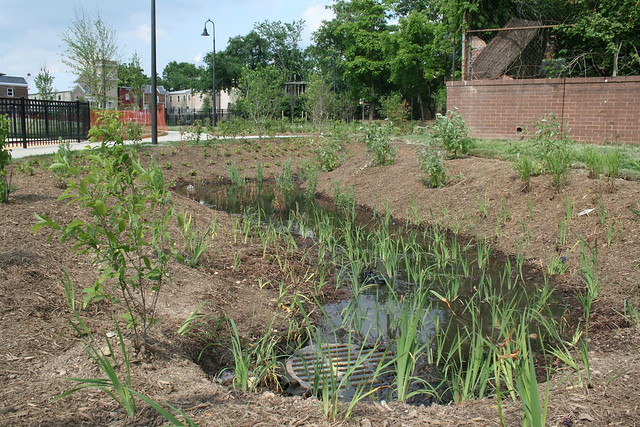
While strolling around our new park, you might have noticed this landscaped depression near the mural.
This is a rain garden. The storm drains within the park empty into this garden so the ground has an opportunity to absorb rainwater. Obviously there’s a limit to what the ground can absorb in a downpour, so the grate at the bottom of the photo carries the overflow into the sewers.
Under each street in areas of the city built before 1900 is a single pipe that carries both sewage and storm water. The problem with this combined system is that heavy rain storms force the combined system to overflow at 53 discharge points into Rock Creek, the Potomac, and the Anacostia.
Building these rain gardens helps alleviate the pressure on the sewer system during storms and thus helps protect the water quality of our rivers.
Trees Planted
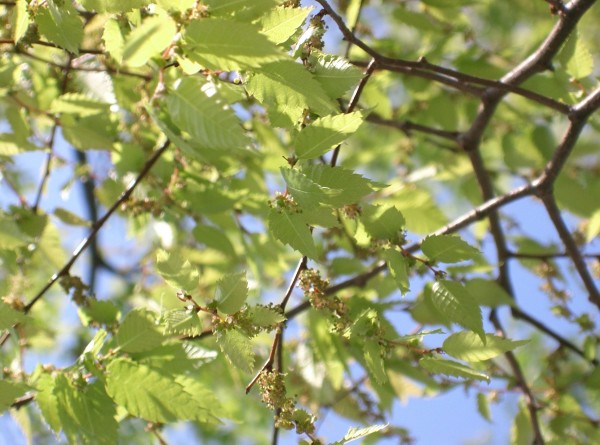
The Japanese Zelkova (Zelkova serrata) is one of the many species of trees regularly planted in DC
The District’s Urban Forestry Administration is responsible for planting street trees throughout the city. Just before Christmas we published a map (below) of the UFA’s 2010 tree planting list for LeDroit Park and Bloomingdale.
What a great joy it was to walk home Thursday night to spot a new Japanese zelkova (pictured above) taking root between the sidewalk and street beside our house. A quick walk around the neighborhood revealed that the other trees had been planted, too.
View LeDroit Park-Bloomingdale Tree Planting Schedule in a larger map
The Combined Sewer Paradox
 After big snowstorms, the melting snow swells the Potomac and Anacostia for days. The good news is that in older parts of Washington, including LeDroit Park, the heaps of gray slush— snow mixed with car grease, road salt, and road sand— will not be dumped straight into the rivers as it will be in the rest of the Washington area as the City Paper reports.
In older parts of the city built before 1900 (see the map), our sewers and our storm drains are the same system, meaning that the water leaving your sink joins up with the same water running into the street grates. Only older cities have this combined system; the rest of the the Washington area, including newer parts of the District, have separate pipes for sewage and for storm water.
This combined system is usually considered an environmental problem, since occasional heavy rainfalls inundate the combined system, forcing it to eject both storm water and raw sewage into the rivers and Rock Creek for a few hours through 53 outfall points.
However, with melting snow, the system is reversed into an environmental virtue, since the melting slush—salt, sand, grease, and all— are filtered with household waste at the Blue Plains treatment plant at the southern end of the District.
Let’s call this the combined system paradox: an environmental threat to the city’s waterways in the spring and summer becomes an environmental steward when winter snows melt.








Recent Comments