
McMillan Fountain ready for its close-up
As part of DC Water’s construction work on the First Street Tunnel, the agency paved a temporary parking lot on the grounds of the McMillan Reservoir. Community leaders took a tour of the tunnel project on Saturday and got a close-up photo of the top of the McMillan Fountain, which stands just beyond the parking lot fence.
The base of the fountain, pictured below as it originally stood, lies dismantled in Fort Washington National Park in Prince George’s County.

“Dig LeDroit” Spring Kickoff on Apr. 26
Mark your calendars for the annual spring celebration in the park on Sunday, April 26 from 11 am to 2 pm. The LeDroit Park Civic Association and Common Good City Farm are putting together an event that includes activities for kids and opportunities to learn about the farm.
Children’s activities
- spring egg hunt
- seedling planting
- face painting
Volunteer activities
- tree watering and mulching
- park clean-up
- dogpark clean-up
- community garden work day
General activities
- Tours of the farm
- Sign-up for income-qualifying weekly vegetable program
- Seedling sale: kale, collard greens, lettuce, basil
More details will come as the event approaches.
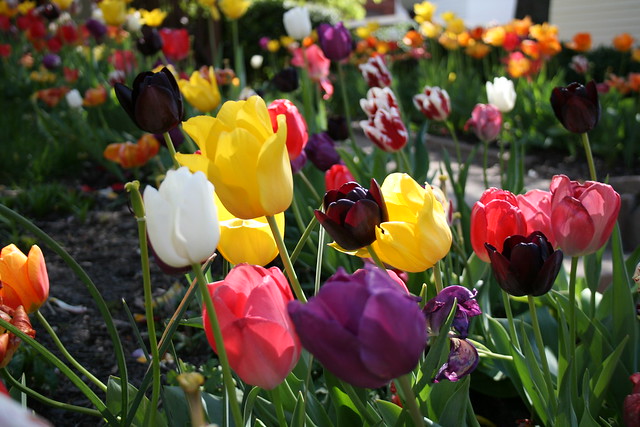
Photo: Tulips on the 200 block of Elm Street. April 2012.
Tuesday forum will discuss all residents’ concerns
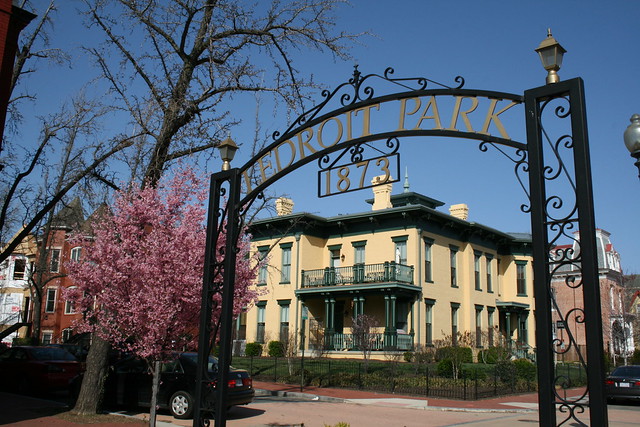
What concerns you about the neighborhood? Are you afraid of car break-ins? Are there not enough gyms nearby? Are you having trouble finding street parking? Are you dissatisfied with the park?
The LeDroit Park Civic Association is hosting an open forum on all neighborhood issues at the next meeting. Join us on Tuesday, March 24 at 7 pm in the basement of the Florida Avenue Baptist Church (623 Florida Avenue, enter at the back) to discuss any issue you are facing in the neighborhood.
Neighbors to show their support for the market after it was robbed

LeDroit Park residents plan to show support for the LeDroit Park Market (1901 4th Street NW) after it was robbed on Friday at 8:15 pm. The armed, masked robber made off with less than $400 in cash and undoubtedly terrified the two women who were staffing the store at the time.
To show our support for the store, which reopened within the past year under new management, the LeDroit Park Civic Association is asking neighbors to stop by on Wednesday, March 25th from 7 pm to 9 pm.
Your favorite neighborhood blogger will be there too!
Howard promises to renovate the Terrell House
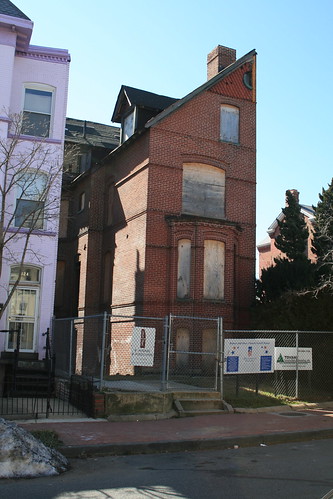 After years of neglect, Howard University has agreed to finish renovations of the Mary Church Terrell House (326 T Street NW).
Mary Church Terrell was a civil rights leader who lived from 1863 to 1954 and spent the last decades of her life in LeDroit Park. She was instrumental in lawsuit, D.C. vs. J. R. Thompson Co., Inc., that that led the U.S. Supreme Court to desegregate all restaurants in D.C. in 1953.
Mary Church Terrell and her husband Robert Terrell, D.C.’s first black judge, willed the house to their daughter and, upon her death, to Howard University, which took control of the house in 1998.
The university had long planned to renovate the house and turn into a museum focused on the Terrells and the history of the neighborhood. Those plans never came to fruition.
However, in a Feb. 26 meeting between community leaders, including me, and Howard University President Wayne Frederick, the president assured us that restoration work will start on the house within six months.
We have not seen the exact plans of the physical restoration the university will complete, but Dr. Frederick wants to revisit the concept of housing a museum as he perceives a lack of support for that specific use.
The president is well aware of the vast community support toward the house’s physical restoration. The LeDroit Park Civic Association voted in January to send a letter to the university’s leadership expressing disappointment at the state of the Mary Church Terrell House and the Walter Washington House (408-410 T Street NW), both of which are Howard properties in different state of disrepair.
A slew of hip retailers are opening near LeDroit Park
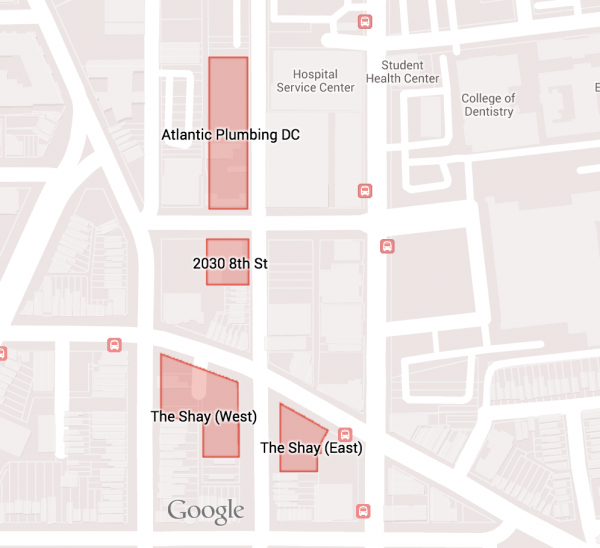
New shops are opening just west of LeDroit Park. Prolific Washington area developer JBG is nearing completion of the four buildings it is constructing just west of Georgia Avenue. Warby Parker, Compass Coffee, and restaurants from the people behind Birch & Barley and Daikaya will open soon.
The buildings, you may recall, have been in progress for several years. The northern two buildings, Atlantic Plumbing and 2030 8th Street sit on 8th Street on either side of V Street NW. The northern building, Atlantic Plumbing, is a 375-unit apartment building with ground-floor retail and a six-screen movie theater. The smaller southern building, 2030 8th Street is a 62-unit condo building.
The WBJ summed up the retail summed up the retailers coming to Atlantic Plumbing:
- Landmark Theatre – Six-screen theater featuring independent films.
- Hazel (probably) – A new restaurant from Neighborhood Restaurant Group, which currently owns Birch & Barley and Bluejacket.
- An unnamed ramen restaurant from the people behind Daikaya in Chinatown.
- Bazaar Spices – The second location for this independently owned herbs and spice shop, which also sells at Union Market.
- Cherry Blossom Creative – A graphic-design studio that will also offer original works for retail purchase.
- Foundry Gallery – An artist-run gallery that will move from Dupont Circle.
- Declaration Pizza – A new pizza shop from the owners of Lincoln and Teddy & the Bully Bar.
- Tasty Burger – The first DC-area location of this Boston-based burger chain.
- Typecase Industries – A locally-based letterpress and design studio.
- Washington Project for the Arts – The headquarters for a non-profit arts support organization.
On the 700 and 800 blocks of Florida Avenue, JBG is nearing completion of the two buildings, called the Shay, it has constructed above the Metro tunnel. Back in 2011, I documented the protracted saga to redevelop these two parcels. Though JBG had considered offering one of the buildings as condos, it has since chosen to keep both buildings as rentals, delivering a total of 336 apartments.
The WBJ reports the following retailers for the Shay:
- Warby Parker – Purveyor of hip spectacles.
- Freehand – A restaurant from Tim Ma, owner of Water & Wall in Arlington and Maple Ave. in Vienna.
- Compass Coffee – The second location for the coffee shop that currently operates on 7th Street in Shaw.
- Aesop – An Austrialian retailer of sustainable skincare, haircare and other personal care products.
- Benrus – The second U.S. locaiton of this watchmaker.
- Kit and Ace – Luxury clothing retailer.
- Read Wall – D.C.-based menswear retailer selling knits, outerwear, custom suits, and neckware.
- Steven Alan – Casual clothing for men and women.
Street sweeping resumes Monday

The Department of Public Works, which collects trash, plows snow, and issues parking tickets, will resume street sweeping on Monday, March 16. If you park on the street, be sure to move your car according to the street sweeping signs posted on each street.
Street sweeping ended in October and several of our streets desperately need cleaning.
It’s snowing
It’s snowing outside and LeDroit Park is more beautiful than ever.
Uprising Muffins on 7th Street closed early.
Meet your neighbors at the happy hour on Tuesday
Meet your neighbors at the next LeDroit Park Happy Hour, the LeDroit Park Civic Association’s monthly informal social event.
This month we’re meeting on Tuesday, March 10 from 6:30 pm to 8 pm at the bar All Souls (725 T Street NW).
Everyone is welcome to attend.
Mayor Bowser promises action to fix the park field
Mayor Muriel Bowser attended last night’s meeting of the LeDroit Park Civic Association to announced her priorities and take questions from the audience. During the question period, the Association’s parks committee chair discussed the shabby state of the field at the Park at LeDroit. Ms. Bowser directed her two Ward One staff liaisons to add this to their “hotlists”.
The company that constructed the fields at the four-year-old park layered sod on top of construction fill that they piled over old asphalt pavement. The result has been a patchy field with areas of dead grass and protruding construction material. During the fall tree planting with Casey Trees, volunteers broke several pieces of Casey Trees’ equipment trying to dig holes into which the 45 trees were planted.
In May of last year, I led a neighborhood walk-through with then-Councilmember elect Brianne Nadeau and we stopped by the field to inspect its poor condition. Don’t give up hope! The Civic Association is building a campaign to get the field repaired for good.







Recent Comments