
LeDroit Park was a hot market in 1978, but much more affordable than today
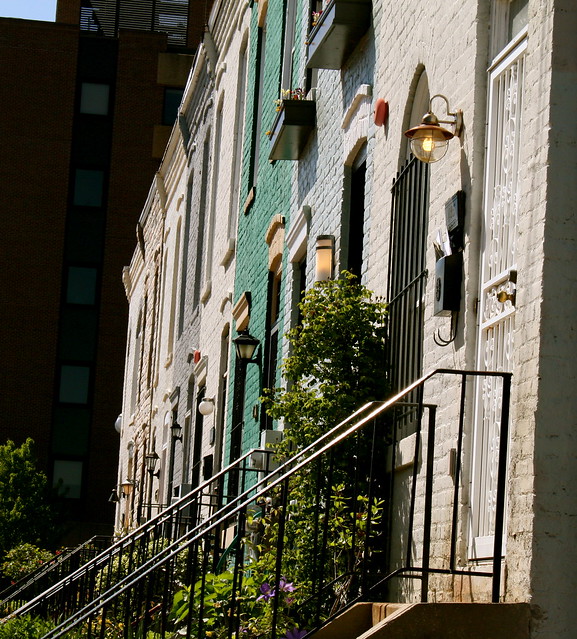
A neighbor pointed us to this 1978 article in the Washington Star naming LeDroit Park the neighborhood with the highest annual appreciation in single-family home assessments. Home values increased 51% in just two years.
Much of the increase was attributed to Howard University’s purchase of homes in the neighborhood. The university has since divested itself of nearly all single-family houses here.
The average neighborhood assessment back then, according to the assessor quoted in the article, was about $25,000. Even in 1978 that was considered low and the figure was about 1.5 times the District’s median household income in 1979, which was $16,211. In 2013 the average sales price of a LeDroit Park home (including condos) was $562,029, which was 9.2 times the District’s median household income in 2013, which was $60,675.
A trashcan thief has struck LeDroit Park
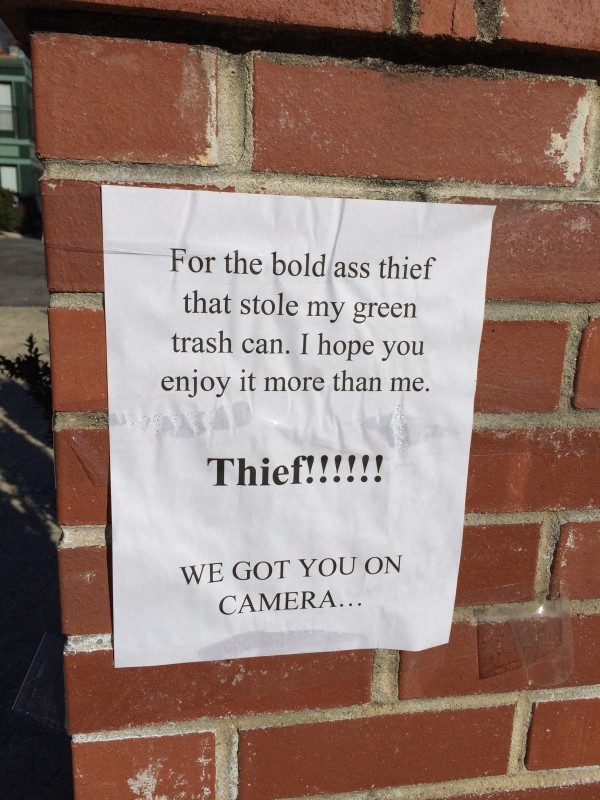
Several neighbors reported their trashcans stolen last week. One neighbor also reported following her can’s tracks in the snow in the sidewalk, but losing the trail blocks away at Florida Avenue, where the snow had melted. Another resident posted the frustrated notice above.
Kevin Twine, the spokesman for the Department of Public Works, the District agency that collects trash and recycling and plows the streets, advised residents the discourage theft by “painting your address on your containers in the most garish way possible”.
Does anyone have any magenta paint and Comic Sans stencils I can borrow?
Restaurant Costa Brava and Howard Univ. present tonight
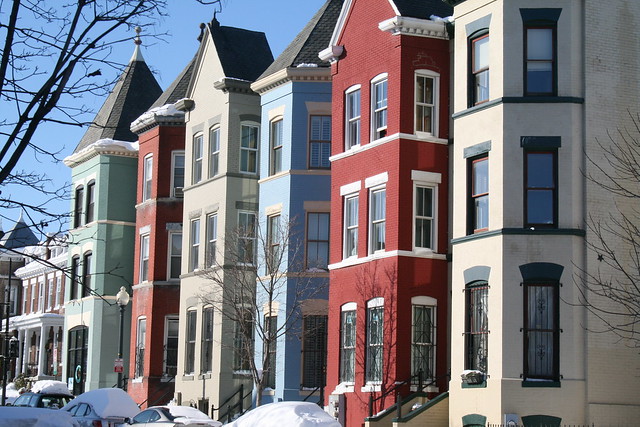
The January meeting of the LeDroit Park Civic Association is tonight at 7 pm in the basement of the Florida Avenue Baptist Church (enter at U Street and Bohrer Street).
The owner of Costa Brava (1837 First St NW) will introduce the neighborhood to his new Catalonian restaurant. I had dinner at the restaurant late last year and I highly recommend it.
Howard University representatives will propose changes to university policy regarding student conduct and public safety:
- Expanding the area around the campus deemed subject to the reporting of crime statistics.
- Giving universities broader authority to address student misconduct that takes place off-campus.
- Giving the Mayor or a university President the ability to request the assistance of other campus police personnel in cases of emergency, thus allowing the Metropolitan Police Department to focus their resources elsewhere.
The meeting will also include the usual committee reports and a community open forum. Everyone is welcome to attend.
LeDroit Park Market building owner seeks historic exception

The owners of the 1901 4th Street, which currently houses the new LeDroit Park Market, are appealing a denial from the Historic Preservation Review Board (HPRB) to add a roof deck and exterior stair to the building.
The owners sought permission to add a 10′-by-14′ deck to the roof of the building, partly hidden by the parapet and gables at the roof’s edge. An exterior stair would be built above the garage, would be visible from 4th Street, and would connect the house to the roof deck.
The Historic Preservation Office (HPO) staff report summarized the project and recommended that HPRB deny the application for the following reasons:
- The exterior access stair would be visible from 4th Street and “would create a very prominent and modern intrusion into the character of the historic district.” Furthermore, the stair’s extension to four feet above the height of the roof would “alter the perceived dimensions” of the building and further obstruct the view of neighboring rowhouses.
- Though roof decks are sometimes permitted when they do not demolish historic features and are not visible from the street, HPO staff worried that this deck, placed close to the building’s edge, “cannot guarantee that the furniture, illumination and activity associated with a roof deck would also not be visible.” Furthermore, HPO staff noted that no contributing buildings in the LeDroit Park Historic District have roof decks (which is not entirely true).
At its September 18th meeting, HPRB voted to deny the application, following the HPO staff recommendation. The owners are appealing the denial to the Mayor’s Agent, a position created to review special historic preservation cases and grant exceptions to the rules under limited circumstances:
- If historic preservation rules would place an “unreasonable hardship” on the property owner.
- If the proposed project is “necessary in the public interest”.
- If the proposed project will deliver “significant benefits to the District of Columbia or to the community by virtue of exemplary architecture, specific features of land planning, or social or other benefits having a high priority for community services.”
Few appeals to the Mayor’s Agent ever succeed and those that do are typically public or public-private projects. In 2009 the Mayor’s Agent permitted the Third Church of Christ, Scientist, to demolish its brutalist sanctuary near the White House since the building’s upkeep was a financial burden to the church. In 2012 the modernization of a historic firehouse in Cleveland Park was deemed “necessary in the public interest” since modern firetrucks required the widening of the historic firehouse’s doors. In 1980 the Mayor’s Agent permitted the demolition of historic buildings to create the original convention center, deeming it a project of “special merit”.
The owner’s renovation of this historic property is certainly welcome. However, it is hard to argue that being denied a roof deck is an “unreasonable hardship” or that the construction of a roof deck is “necessary in the public interest” like a firehouse, or that a roof deck will deliver “significant benefits” to DC or the community like a convention center.
Nonetheless, the Mayor’s Agent will hold a public hearing on this case on Friday, February 27, 2015, at 9:30 am at the Office of Planning (1100 4th Street SW, Suite E650). Read these details if you wish to testify.
Here is the full HPO staff report:
LeDroit Park Market reopens

The LeDroit Park Market (1901 4th Street NW) has finally reopened under new management. The market stocks essentials like milk, ice cream, chips, bread, coffee, paper towels and is open daily from 7 am to 10 pm. The market also serves sandwiches and fresh coffee and will soon sell beer and wine.
The reviews posted on the neighborhood listserv have been positive so far. Neighbor Anita writes:
I stopped by the morning and picked up a slice of banana bread. I returned for lunch and had a nice chicken Caesar salad. I enjoyed both.
Dee writes:
I went there for the grand opening and had what was probably one of the best cups of coffee I’d tasted in a long time. I sat with my friend and we chatted at the window for over an hour, and got a nice cheery goodbye from the staff as we left. It’s definitely a gem in the neighborhood and worth the trip!
The market had operated under various owners over countless decades. It closed in 2011 and the shop owner, Simon, was rumored to have returned to Ethiopia. The building’s owner reincarnated the market for about a year, but the store’s selection, which focused more on exotic gourmet items more than typical essentials of a corner store, failed to attract enough enthusiasm.
The owner closed the market and sold the building to a couple that now lives upstairs. The couple leases the market to a family that operates several small markets throughout the city.
Go swimming at the indoor pool at the new Dunbar

The new Dunbar High School opened in August 2013 at First and N Streets NW in Bloomingdale Truxton Circle. The new school includes an indoor pool open to the public year round. The Dept. of Parks and Recreation just expanded the pool’s public opening hours to
- Mondays, Wednesdays, and Fridays: 6 am to 8 am and 5 pm to 9 pm
- Saturdays and Sundays: 9 am to 5 pm
To use the pool for free, you need to prove DC residency with a DC driver’s license or other credential.
Edward Brooke, a LeDroit Park native and US Senator, has died

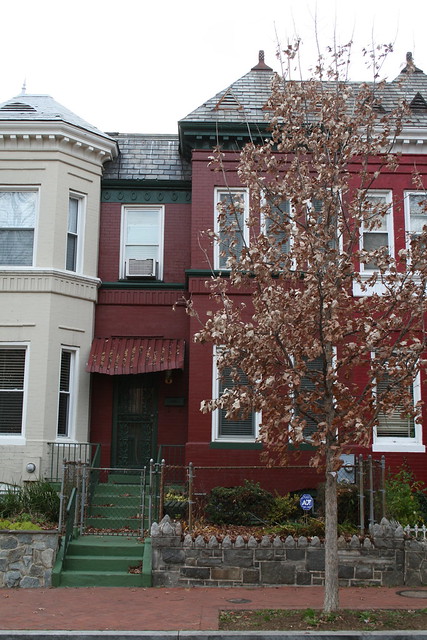
On Saturday, Edward Brooke, a LeDroit Park native and the first popularly elected African-American in the U.S. Senate died at age 95. Mr. Brooke grew up at 1938 3rd Street (pictured below) in LeDroit Park, attended Dunbar High School, and graduated from Howard University in 1941.
After serving in World War II, in which he was awarded a Bronze Star Medal, he moved to Boston and graduated from Boston University Law School. He practiced law in Boston and ran for office several times, usually as a Republican. The idea of a black New England Republican seems like an impossibility today, but the party was more ideologically diverse in that era and Mr. Brooke was part of its now-extinct liberal wing.
Mr. Brooke was elected Attorney General of Massachusetts in 1962 and the state’s voters elected him to represent them in the U.S. Senate in 1966. Mr. Brooke was the first African-American popularly elected to the U.S. Senate.
U.S. Senators were typically appointed by state governments until the ratification of the 17th Amendment in 1913. During Reconstruction the Mississippi state government was under Federal control, meaning those in power were Northern newcomers or abolitionist Southerners with liberal views on race relations. Under this short-lived political alignment, the Mississippi legislature appointed two black Republicans to the U.S. Senate, but their terms were short. Pressure from the former Confederate establishment and political intimidation from white supremacist groups ensured that when the Mississippi government was released from Federal control, new legislators quickly put Jim Crow laws into place. No African-American entered the Senate again until Mr. Brooke in 1966.
Mr. Brooke’s biggest policy achievements include co-sponsoring the Fair Housing Act of 1968 and the 1969 Housing Act’s so-called Brooke Amendment, which limited public housing rent to 25% of the tenant’s income.
In 2004, Pres. Bush awarded Mr. Brooke the Presidential Medal of Freedom and in 2009 Congress awarded Mr. Brooke a Congressional Gold Medal.
He died on Saturday at age 95 at his home in Coral Gables, Florida. Below is a photo of his childhood home in LeDroit Park.
1925 photo of Griffith Stadium also shows LeDroit Park
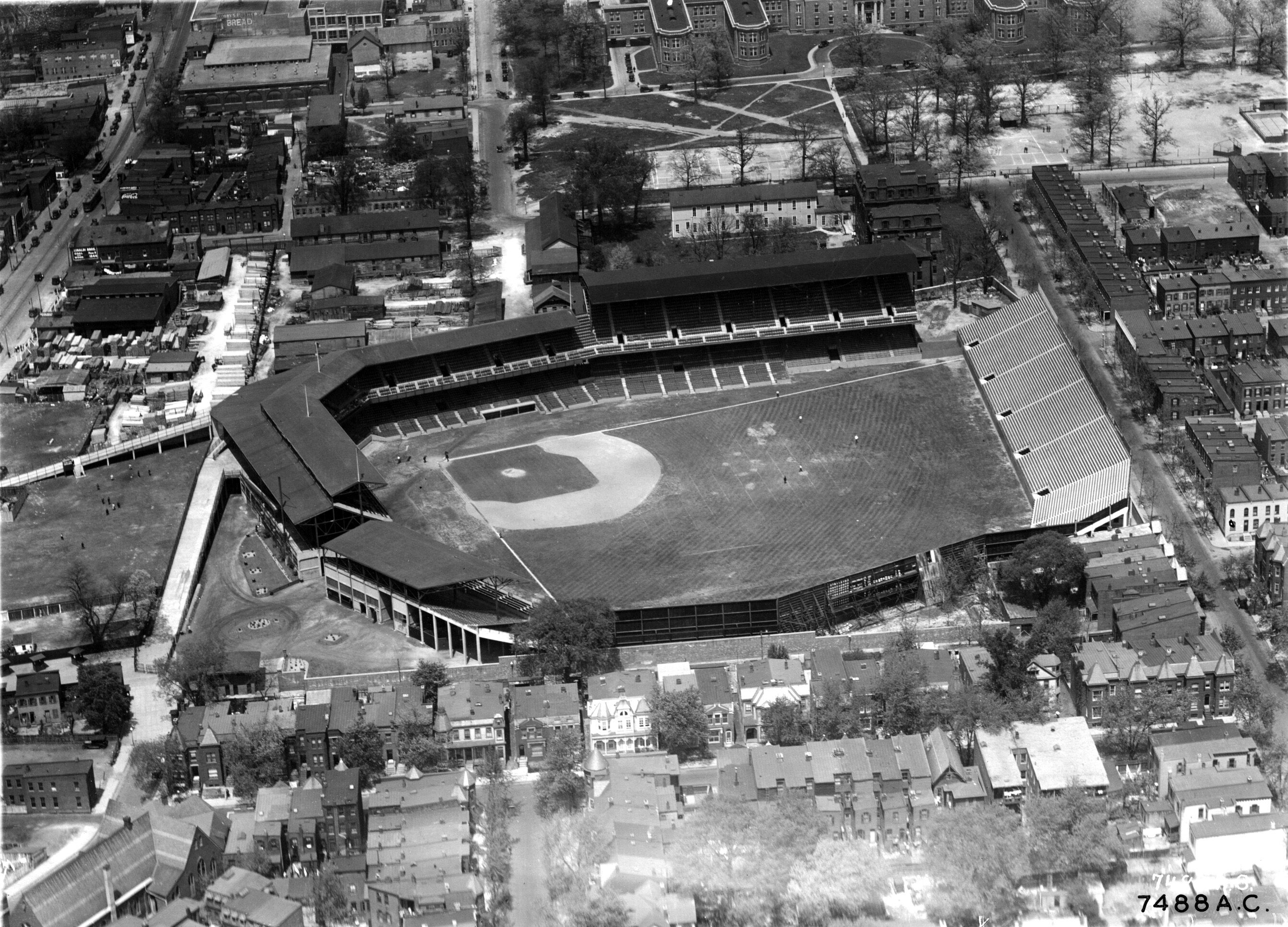
Every time I come across a photo of Griffith Stadium, which stood where Howard University Hospital now stands, I look carefully for an angle of LeDroit Park. By way of Ghosts of DC comes this superb 1925 aerial shot looking north at the stadium and part of the neighborhood.
The east-west street in the foreground is the 500 and 600 blocks of U Street NW. Zoom in and look around. Notice the streetcars on Georgia Avenue in the upper-left corner of the photo. Notice the previous incarnation of the Florida Avenue Baptist Church in the lower-left corner.
The stands beyond Griffith’s straightaway center field backed up to 5th Street from Elm to V Streets. Can you imagine hearing the crack of a bat and roar of crowds during a Senators game?
Also note what’s no longer standing. All but seven houses pictured east and north of the stadium have since been demolished, replaced with parking garages, parking lots, public housing, or academic buildings. Nearly all of these houses would be illegal to rebuild today under our 1950s zoning code, which mandates minimum lot sizes and house widths to which much of historic LeDroit Park does not conform.
Photo source: National Archives
A new restaurant is coming to 5th & Florida
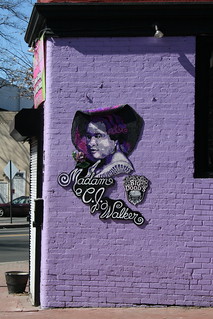
A new restaurant is coming to the short-lived hair salon (pictured right) at 5th Street and Florida Avenue NW. From Paul Carlson, the owner of Vinoteca, comes The Royal, named for the Royal liquor store that once occupied the building many, many years ago.
Mr. Carlson described his forthcoming 40-seat restaurant as a place “where people can stop by on their way home, the price points are lower, and people know each other and know the staff.”
Though Mr. Carlson doesn’t expect the Royal to open for a few months, interested neighbors are invited to visit on Sunday, January 26, from 2pm to 4pm. If you can’t make it on Sunday, come hear Mr. Carlson’s presentation at Tuesday‘s civic association meeting. The association will likely vote on the Royal’s request for an alcohol license.
LeDroit Park fast became a fashionable neighborhood

We found this 1875 article about LeDroit Park’s fast-growing population from 1875. This was just as the neighborhood was being developed as “suburb” of Washington City.
Local News.
Evening Star
October 9, 1875AN INTERESTING ITEM, showing the growth of the city to the north, is the fact that eighteen months ago only two families lived at LeDroit Park, while now more than twenty families make it their residence, and the demand for homes in that beautiful locality is far beyond the supply.
Download a PDF of the original story. You can browse the entire Evening Star online with your DC library card.







Recent Comments